

เคสผิวหนังอักเสบจากภูมิแพ้ที่มีการติดเชื้อแทรกซ้อน


อาการคัน ผิวแดง อย่ามองข้าม: เคสผิวหนังอักเสบจากภูมิแพ้ที่มีการติดเชื้อแทรกซ้อน
อาการคันและผิวหนังแดงในสัตว์เลี้ยง อาจดูเป็นเพียงปัญหาเล็กน้อยในช่วงแรก
แต่ในหลายกรณี อาจเป็นสัญญาณของ โรคผิวหนังที่ต้องได้รับการวินิจฉัยอย่างละเอียด

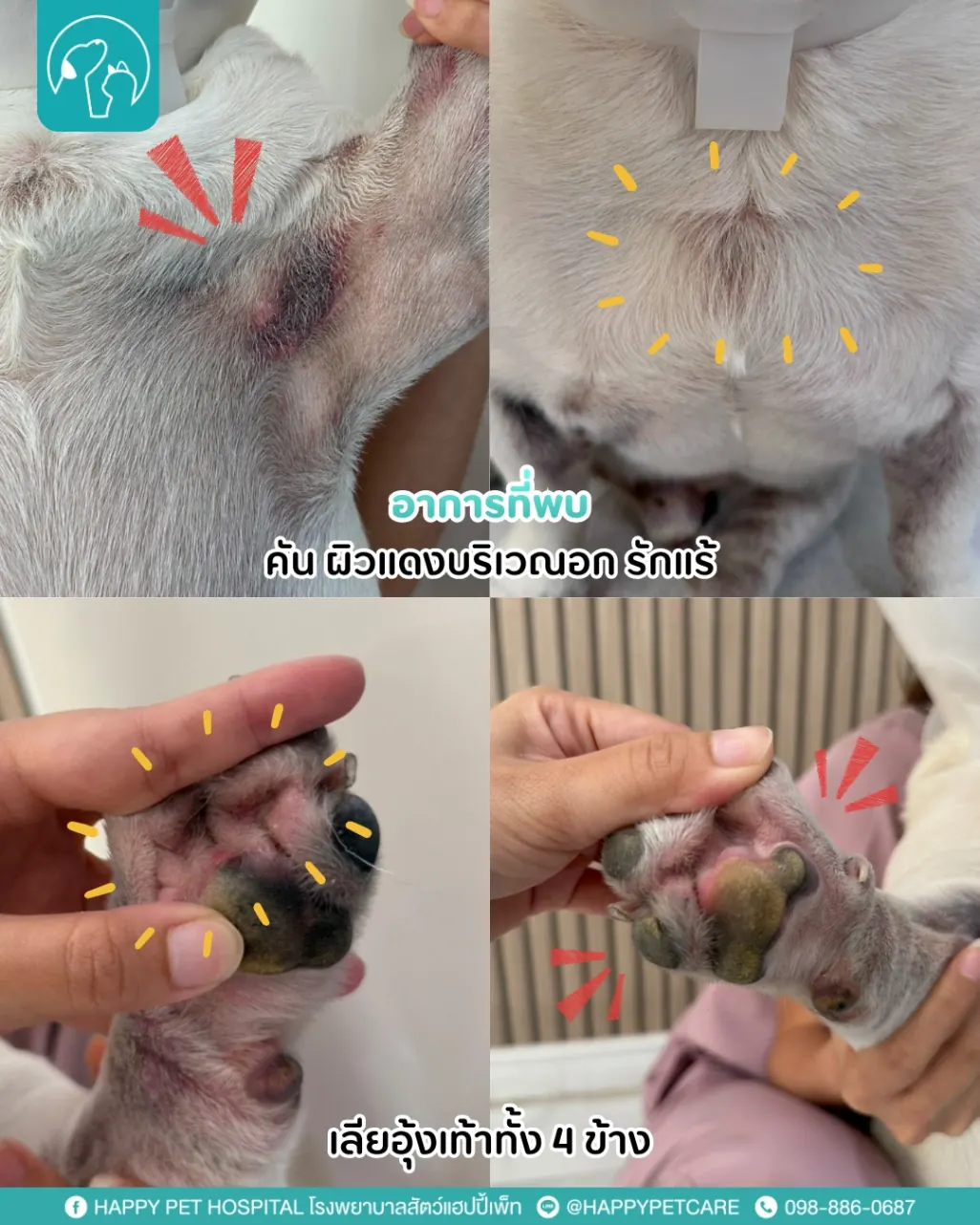
เคสนี้ น้องมาด้วยอาการคันและผิวแดง
บริเวณ อก รักแร้ และอุ้งเท้าทั้ง 4 ข้าง
จากการตรวจร่างกายพบว่า ผิวหนังอักเสบค่อนข้างชัดเจน
และมี รอยแดงบริเวณอุ้งเท้า ซึ่งเกิดจากการเลียสะสมเป็นระยะเวลาหนึ่ง
การวินิจฉัย: ตรวจลึกเพื่อหาสาเหตุ
เพื่อหาสาเหตุที่แท้จริง สัตวแพทย์ได้ทำการ
เก็บตัวอย่างผิวหนังเพื่อตรวจในห้องปฏิบัติการ
และนำไปส่องภายใต้ กล้องจุลทรรศน์
ผลตรวจพบว่า
มี เซลล์เม็ดเลือดขาวจำนวนมาก แสดงถึงการอักเสบ
พบ เชื้อยีสต์ (yeast) ร่วมด้วย
ผลดังกล่าวสอดคล้องกับภาวะ
ผิวหนังอักเสบจากภูมิแพ้ที่กำลังเห่อ (acute flare-up)
ซึ่งทำให้ผิวหนังอ่อนแอ และเกิด การติดเชื้อแทรกซ้อน ตามมาได้ง่าย

แนวทางการรักษา
การรักษาในระยะนี้มุ่งเน้นทั้ง
ควบคุมอาการอักเสบ และจัดการการติดเชื้อ
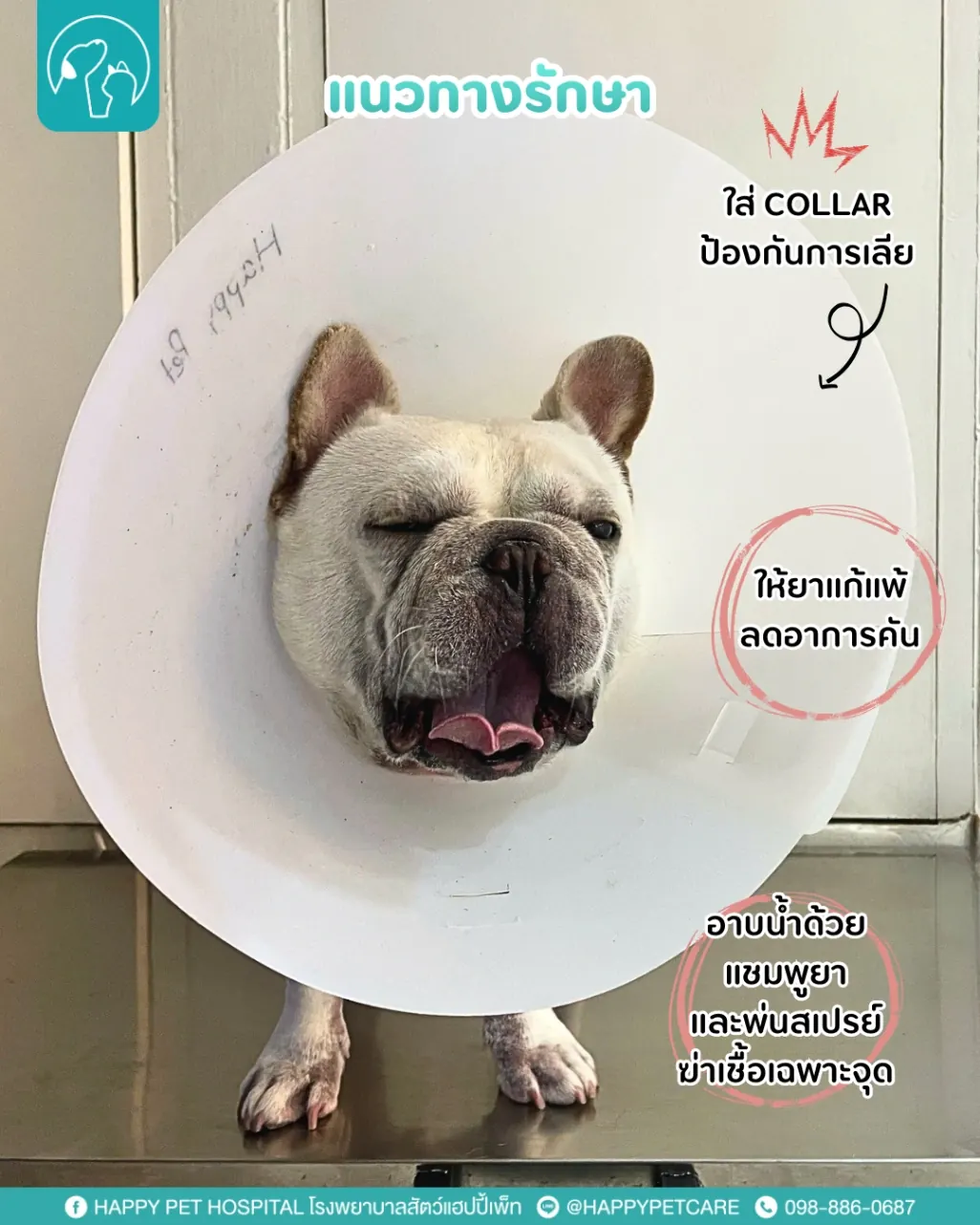
✔ ใส่ ปลอกคอกันเลีย (E-collar) เพื่อลดการระคายเคืองเพิ่มเติม
✔ ให้ ยาปฏิชีวนะ ตามความเหมาะสม
✔ ใช้ ยาแก้แพ้ เพื่อลดอาการคัน
✔ อาบน้ำด้วย แชมพูยา และใช้ สเปรย์เฉพาะที่
ทำไมต้องรีบรักษา?
ผิวหนังอักเสบ โดยเฉพาะที่มีสาเหตุจากภูมิแพ้
หากได้รับการรักษาตั้งแต่ระยะเริ่มต้น
มักจะ ตอบสนองต่อการรักษาได้ดี และควบคุมอาการได้ง่ายกว่า
ในทางกลับกัน หากปล่อยไว้นาน
อาจเกิดการติดเชื้อซ้ำซ้อน และกลายเป็นปัญหาเรื้อรังได้
เมื่อไหร่ควรพามาพบสัตวแพทย์?
หากสังเกตเห็นอาการเหล่านี้ แนะนำให้พามาตรวจ:
คันบ่อย เกา หรือเลียตัวเองซ้ำ ๆ
เลียอุ้งเท้าบ่อยผิดปกติ
ผิวหนังแดง มีผื่น หรือมีกลิ่นผิดปกติ
การตรวจหาสาเหตุอย่างถูกต้อง
จะช่วยให้สามารถวางแผนการรักษาได้ตรงจุด และได้ผลดีที่สุด

Itching and Red Skin: A Case of Allergic Dermatitis with Secondary Infection
Itching and redness in pets may seem like minor issues at first.
However, in many cases, they can indicate underlying skin conditions that require proper diagnosis.
In this case, the patient presented with itching and redness
around the chest, armpits, and all four paws.
Physical examination revealed significant skin inflammation, along with redness on the paws caused by chronic licking.
Diagnosis: Looking Beyond the Surface
To identify the underlying cause, a skin sample was collected
and examined under a microscope in the laboratory.
Findings included:
A high number of white blood cells, indicating inflammation
Presence of yeast organisms
These findings are consistent with
an acute flare-up of allergic dermatitis,
which often weakens the skin barrier and leads to secondary infections.
Treatment Approach
The treatment plan focused on both
controlling inflammation and managing infection
✔ Use of an E-collar to prevent further licking
✔ Antibiotics as indicated
✔ Anti-allergy medication to relieve itching
✔ Medicated shampoo and topical spray
Why Early Treatment Matters
Skin conditions, especially those related to allergies,
tend to respond well when treated early.
If left untreated, they may lead to
chronic inflammation and recurrent infections,
making the condition more difficult to manage.
When Should You See a Veterinarian?
You should seek veterinary care if your pet shows:
Frequent scratching or licking
Excessive paw licking
Red, irritated skin or unusual odor
Early diagnosis allows for targeted treatment and better long-term outcomes